Freedom, GEABSOLUTE POWERS CORRUPT ABSOLUTELY, General Election (GE15), Malaysia, Politics, polling Nov 19: Destroy Umno for the betterment of Malaysia, race, religion, Solidality, support Aliran for Justice

Share This

Showing posts with label property. Show all posts

Thursday, 23 April 2026

Mixed property outlook amid higher oil prices

 High-rise and luxury segments seen most vulnerable
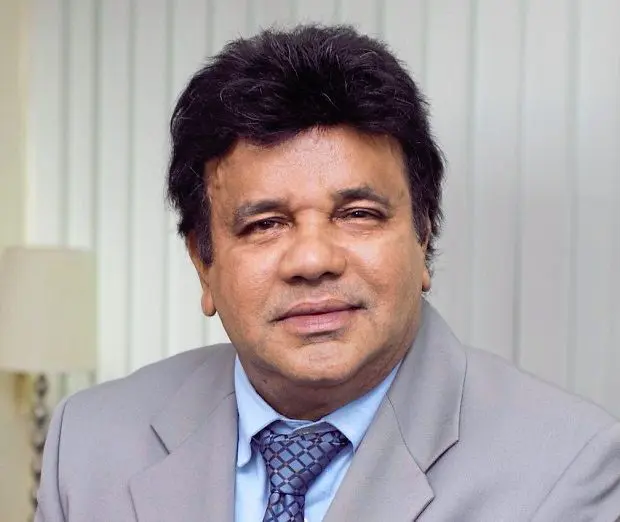
PPC International MD Datuk Siders Sittampalam

PETALING JAYA: Malaysia’s property market remains an appealing investment avenue despite increasing global uncertainties, according to industry experts.

PPC International Sdn Bhd managing director Datuk Siders Sittampalam said the local property market remains attractive to investors despite the ongoing West Asia crisis.

“However, the appeal is likely to be selective rather than broad-based, with investment decisions increasingly adopting a sector-led approach.

“It is important to recognise that Malaysia’s property market continues to be driven largely by domestic fundamentals, rather than direct exposure to the Middle East,” he told StarBiz.

An analyst said investing in property during global economic uncertainty “still makes sense,” adding, however, that it is “no longer about riding a broad market upswing”.

“It’s about selectivity, resilience, and long-term thinking. Property remains attractive because it’s a tangible, income-generating asset.”

Amid uncertain times, he said investors often value “stability.”

“Real estate can provide relatively predictable rental income and act as a partial hedge against inflation. Compared to more volatile assets like equities, it tends to be less reactive to short-term global shocks.”

However, he said the current environment has changed the investment outlook.

“Higher construction costs, cautious lending and more price-sensitive buyers mean that not all properties will perform well. Oversupply in certain segments, especially high-density developments, can limit both rental yields and capital appreciation.

“At the same time, global uncertainties can affect job markets and consumer confidence, indirectly impacting demand,” he said.

Compared with many countries in the region, Siders noted that Malaysia’s political neutrality provides a degree of stability.

“As such, the crisis is expected to affect the market only indirectly, primarily through higher oil prices, inflationary pressures and shifts in investor sentiment.

“One key reason the market remains attractive is that, during periods of geopolitical uncertainty, investors tend to rotate away from volatile equities into hard assets such as real estate.”

Siders emphasised that property, particularly income-producing assets, is generally less sensitive to short-term volatility affecting equities and other financial instruments.

“That said, the principal risk lies in a prolonged period of elevated oil prices, which could translate into higher domestic transportation costs, increased steel and concrete prices, pressure on rental affordability and slower take-up rates for high-end residential properties.”

Collectively, Siders said these factors may erode household disposable income and temper overall market momentum.

“In my view, investment strategies should now be anchored on income generation and strong underlying fundamentals, rather than expectations of capital appreciation or speculative gains.”

One market observer said that in times of uncertainty, the key question isn’t whether to invest, but rather “how to invest.”

“Investors should focus on properties with strong fundamentals – good locations, access to infrastructure, proximity to employment hubs and realistic pricing.

“Rental demand is especially important now, as steady income can offset slower price growth. A longer investment horizon also becomes critical, since quick gains are less likely in a cautious market cycle.”

Amid current economic uncertainties, a property analyst said there would be an impact on the market should things escalate further or be prolonged.

In such a situation, he said the impact would vary depending on the property segment. He said high-rise condominiums, especially in Kuala Lumpur, would be the most vulnerable segment.

“This segment would be the hardest hit because buyers here are often investors or middle- to upper-income earners.”

He noted that this segment also tends to be more sensitive to economic uncertainty, rental yields and short-term sentiment.

“Should oil prices spike, investors here will likely pull back and there will be fewer speculative purchases.

“The number of expatriates would also shrink if the global economy slows. Moreover, rental demand for these types of properties could also soften.”

Ultimately, this could lead to slower price growth or stagnation for high-rise condominiums.

“There would be higher unsold inventory. This is already an issue for condominiums within the Klang Valley,” he said.

Similarly, luxury and high-end properties are also at high risk, he noted.

“This segment is highly dependent on foreign buyers and investor sentiment.

“Oil price spikes often come with global uncertainty, which reduces foreign inflows and makes buyers more cautious. In such situations, transactions within this segment could drop significantly and prices may stagnate or correct.”

On the flip side, he said affordable houses (or mass-market properties) would be the most resilient if global economic conditions continue to worsen.

“This segment holds up better because it is driven by genuine need for owner occupation rather than investment.

“It is also often supported by government schemes and financing access. Even if oil prices push up living costs, people still need homes.

“Demand may slow slightly, but the segment still remains relatively stable. Prices may still inch up, albeit more slowly.”

Nevertheless, higher oil prices equals higher fuel costs, he noted. “Therefore, commuting can become more expensive.

“In such cases, locations far from city centres may see reduced appeal, while well-connected areas (especially ones near mass rapid transits and light rail transits) will hold their value better.”    

By EUGENE MAHALINGAM eugenicz@thestar.com.my

Wednesday, 10 September 2025

Report property transfers promptly


Those who fail to notify Lhdn or are late in doing so can be fined or jailed

— AZMAN GHANI/THE STAR
New rules: transactions on property changes must be reported through the mytax portal.

KUALA LUMPUR: Parties involved in property ownership transfers in Malaysia must report to the Inland Revenue Board (LHDN) within 60 days for Real Property Gains Tax (RPGT) purposes.


LHDN principal assistant director of the Stamp Duty & Real Property Gains Tax Operations Department Azman Muhammad said transactions such as sale and purchase, transfer of rights, transfer of ownership and assignment of property must be reported through the Mytax portal.


“It is the responsibility of the disposer (seller) and acquirer (buyer) to report the disposal and acquisition of assets to LHDN.


“Some do report, but are late. If reported late, a late penalty will be imposed under Section 29(3) of the RPGT Act.


“Prosecution can also be taken against those who fail to submit the RPGT Return Form, with fines of up to RM5,000 and imprisonment not exceeding 12 months, or both,” he said during Bernama


Radio’s “Klinik Cukai” programme on the subject of RPGT.


Azman said the RPGT was aimed at helping increase national revenue, educate the public on tax responsibility and curb speculation in the property market.


“RPGT is a tax imposed on capital gains. Generally, capital gains are not taxed. However, in this case, exemption should not be given due to the high value involved and rampant speculative activities.


“Malaysians who genuinely need homes are forced to buy at higher prices due to speculative activities in property sales. As such, the government believes that stabilising the property market through RPGT is necessary to assist the people,” he said.


Azman said RPGT rates were calculated based on the holding period of the property, with the rate decreasing according to the duration of ownership and disposer category.


For example, he said individuals who sell property within the first three years would be subject to a relatively high tax rate of 30%, followed by 20% in the fourth year and 15% in the fifth year.


Details of RPGT rates for other categories, including individuals, companies and foreigners, can be checked on LHDN’S official website, www.hasil.gov.my.


Source link


Saturday, 25 January 2025

Landlords left to foot millions in electricity bills due to tenant's illegal crypto mining

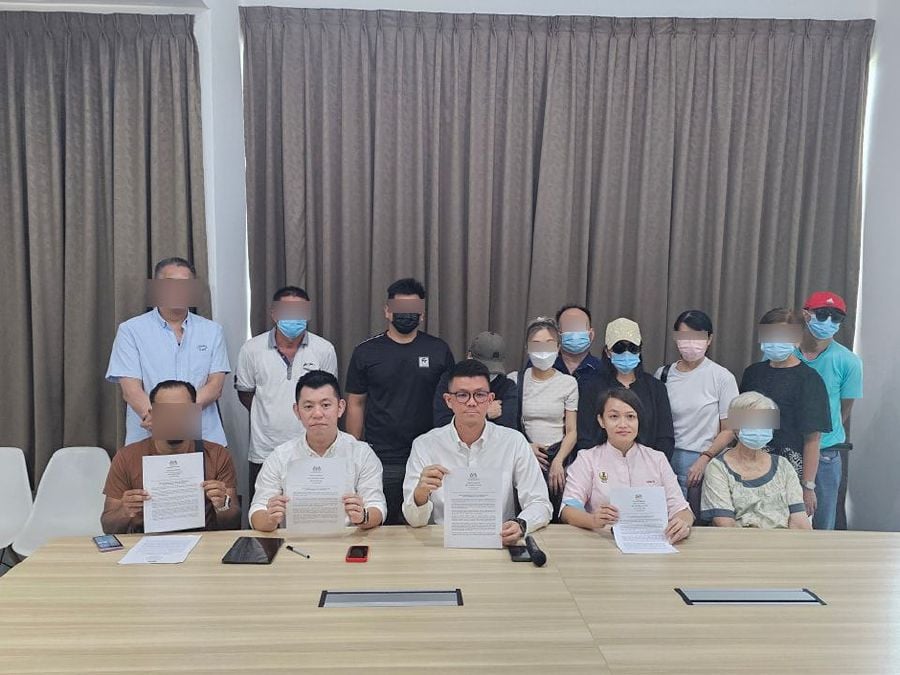
 In a press conference yesterday, Gopeng MP Tan Kar Hing revealed that over 30 property owners had reported the issue to their service centres, with efforts underway to gather information from more than 30 additional owners. Also present were Simpang Pulai assemblyman Wong Chai Yi, and Astaka assemblyman, Jason Ng. - Pic credit Facebook/Tan Kar Hing

Gopeng MP Tan Kar Hing (in white) mingling with the bitcoin victims during a press conference at his service centre. -Ronnie Chin/The Star

KUALA LUMPUR: More than 60 shoplot owners in Ipoh are facing millions of ringgit in electricity claims after their tenants were found to be involved in illegal bitcoin mining activities.

In a press conference yesterday, Gopeng MP Tan Kar Hing revealed that over 30 property owners had reported the issue to their service centres, with efforts underway to gather information from more than 30 additional owners.

The claims range from RM30,000 to RM1.2 million per case.

Tan highlighted that these incidents exposed loopholes in the current legal framework.

"Under the Electricity Supply Act, Tenaga Nasional Bhd (TNB) bases its claims on revenue losses from electricity theft. However, the law does not require TNB to prove that the registered account holder is responsible for the theft.

"This creates a legal loophole, allowing illegal mining activities to go undetected while innocent property owners bear the financial burden," he said.

Tan also pointed out that illegal electricity connections could cause power outages, resulting in losses not only for homeowners but also for TNB and the country.

He urged the Energy Commission, under the Energy and Natural Resources Ministry and relevant enforcement agencies to take action against illegal bitcoin mining activities to prevent further crimes.

In the meantime, Tan said he would continue to raise these cases during the upcoming parliamentary session.

He also advised landlords to transfer TNB accounts into their tenants' names when renting out properties to avoid such incidents.

According to China Press, one property owner, Yen Pit Yun, said that the pressure of facing RM1.2 million in unpaid electricity bills from TNB could drive her to bankruptcy.

Yen explained that the upper floor of her two-storey shop lot in Panorama Lapangan Perdana, Simpang Pulai, was rented out to a tenant in July while she operated a hair salon on the ground floor.

"On Aug 30, I noticed the tenant carrying a large bag of thick electrical cables upstairs, which raised my suspicions and led me to file a police report. The next day, the tenant moved out unexpectedly.

"When I went upstairs to inspect the unit, I found it empty, with holes in the walls and damaged partitions, causing significant losses," she said.

She reported the incident to TNB, but two months later, she received a notice informing her of outstanding electricity bills exceeding RM1.2 million, leaving her feeling helpless.

Yen said her only hope now is the assistance of the Gopeng MP and others to resolve the debt issue.

Source link

Landlord left with RM1.2mil TNB bill

'I Might Go Bankrupt' — M'sian Woman Gets RM1.2mil Electricity Bill Ove

Monday, 18 November 2024

Govt intervention won’t fix housing prices


Every adult should sensibly secure a home as everyone needs a roof over their head ■ Residential properties in prime locations undergoing ‘shrinkflation’, with sustained higher prices despite new units getting smaller

Greyscale low angle view of a highrise building with glass windows under sunlight


THE indirect discussion on multiple-home ownership between Housing and Local Government Minister Nga Kor Ming and former Cabinet member Khairy Jamaluddin over various media channels has ignited interest among Malaysians.

The latter wondered on his podcast Keluar Sekejap last week if limiting property purchases could help alleviate the crisis in affordable housing by addressing the surplus of unsold high-end homes that contribute to inflated prices.

Nga countered by dismissing the proposal, arguing it is not the government’s role to restrict investments in the real estate sector, which has proven to be an effective hedge against inflation and a means of wealth preservation.

He cautioned that such restrictions could harm the property sector and negatively impact some 200 industries connected to real estate, including contracting, plumbing, banking and legal services.

From a foreign perspective, if one were to speak to ordinary Hong Kong residents, it would come as no surprise to find that opinions are mixed on tycoon Li Ka-shing, the billionaire founder of CK Hutchison Holdings Ltd.

Although Li – whose name is synonymous with wealth in the former British colony – is a highly regarded businessperson, many in Hong Kong put the blame for the city’s exorbitant property prices on ultra-rich individuals like him, who made their fortunes by flipping properties in the densely populated region.

In fact, there is a local saying that goes:

“The houses in Hong

Kong are not meant to be inhabited.

They are meant to be ‘fried’ (slang for flipping at a higher price in Cantonese).”

This, of course, is in addition to the fact that most

Hong Kong residents live in high-rise units that can feel claustrophobic.

This may explain why many of them enjoy being out on the streets as long as possible, even into the early hours of the morning.

Back home, if one were to drive around our own cities of Kuala Lumpur, Petaling Jaya, Georgetown and Johor Baru, one can’t help but notice the significant number of high-rise residential buildings under construction.

This prompts one to ask a pressing question: Who is actually buying these units?

In addition, it is reasonable to wonder if property investment is truly so lucrative, what will happen to the prices of these high-rise accommodations in the future, especially in view of the government’s goal to encourage homeownership among the youth?

In fact, just a couple of months ago, before Khairy’s comments on his podcast, this writer – who has never advocated for socialist practices in any way – had wondered out loud to his spouse whether the government might need to step in and limit the “frying” of residential property prices.

So, is Malaysia heading in the same direction as Hong Kong?

At first glance, maybe not, but a deeper look may reveal a different story.

Reports in The Star earlier this week indicated that Malaysian residential properties in prime locations are undergoing “shrinkflation”, characterised by a sustained increase in property prices even though new units are getting smaller.

This trend places a heavier burden on buyers, especially on young Malaysians intending to buy their first home.

However, property prices and social responsibilities aside, it is easy to understand why investing in real estate is so attractive: for one, it is more tangible than stocks, bonds or mutual funds, and the thrill of monthly rental collection appeals to those seeking regular returns.

On the other hand, equities and bonds are much easier to liquidate, and there is significantly less legwork involved as members of the public do not normally run the companies whose shares they own, as opposed to property owners who bear the cost of maintaining their assets.

Furthermore, for those interested in steady income, there are blue-chip banking stocks that offer healthy dividend yields, often with lower upfront costs compared to real estate.

Seasoned investor Ian Yoong, whose portfolio regularly achieves a compounded annual growth rate of 23%, believes that Malaysian property prices have increased at a healthy rate over the past few decades.

He points out that restricting residential-property ownership could suppress prices, ultimately discouraging investment in the sector.

“Malaysia’s property market overhang improved slightly in the first half of 2024 (1H24) compared with 2H23, with the total number of unsold units falling by 12.3% and their aggregate value declining by 19.5%.

“The current property overhang itself will cap the rise of residential property prices over the next couple of years.

“The government should therefore not impose any limits on home ownership,” he tells Starbiz 7.

Yoong emphasises that the current property overhang will naturally limit the rise of residential property prices in the coming years.

He advises the government to refrain from imposing any restrictions on homeownership, as doing so could hinder market growth.

A cursory check supports Yoong’s claim, revealing that high-rise residential property prices in many areas of Kuala Lumpur and Petaling Jaya have stagnated compared with 15 to 20 years ago, when the property market was experiencing a boom.

This is despite the completion of both Mass Rapid Transit (MRT) lines 1 and 2 in recent years, which many investors felt could have improved prices, particularly in neighbourhoods near the MRT stations.

While it is understandable that Yoong would prefer to invest in equities given his success and the comparatively less field work, he strongly advises every Malaysian adult to obtain a home.

“Save for a down payment and apply for a bank loan to buy a residential property that is within your means. It matters little whether it is a lowcost flat or a terrace house.

“While this might not be the best investment strategy, it is a sensible move. Every adult needs a roof over their head,” he says.

Yoong says that the monthly loan repayment acts as a form of forced savings.

He stressed that in reality, not everyone is meant to be a successful investor, but almost everyone can be a property owner.

“Once home ownership is out of the way, one can then focus on investing surplus funds in shares, properties, cryptocurrencies and the like,” he advises.

The Star - StarBiz
KEITH HIEW keith.hsk@thestar.com.my

Related posts:


Owning a home beyond reach of most millennials (Poll Inside)