Freedom, GEABSOLUTE POWERS CORRUPT ABSOLUTELY, General Election (GE15), Malaysia, Politics, polling Nov 19: Destroy Umno for the betterment of Malaysia, race, religion, Solidality, support Aliran for Justice

Share This

Showing posts with label Technology. Show all posts

Thursday, 22 January 2026

View the ‘shocking’ university ranking with composure


Photo: VCG


The newly released "Leiden Rankings" from the Netherlands has recently drawn widespread attention. Eight of the world's top ten universities on the list are from China, with Zhejiang University ranking first, while Harvard University of the US - long a fixture at the top - fell to third place. The results sparked intense discussion. The New York Times published an in-depth analysis under the headline Chinese Universities Surge in Global Rankings as US Schools Slip, while France's Le Monde reported on January 20 that the ranking had triggered widespread shock, noting that the rise of Chinese universities has made the West less certain of itself. How should one view this "shocking" ranking? Our answer is simple: with composure.

First, the ranking does reflect, to a considerable extent, China's advances in education and science and technology. The Centre for Science and Technology Studies at Leiden University in the Netherlands, which publishes the ranking, is highly respected in the global field of scientometrics. The ranking focuses primarily on research output in high-impact international academic journals. Chinese scholars have ranked first globally for years in both the volume of SCI-indexed papers and citation counts. Judged by these criteria, it is hardly accidental that Chinese universities occupy eight of the top ten positions. In 2025, China's research and development (R&D) spending intensity reached 2.8 percent, surpassing the average of economies in the Organization for Economic Co-operation and Development (OECD) for the first time. The rise of many Chinese universities in the rankings is therefore a natural outcome of China's long-standing commitment to the strategy of invigorating China through science and education, coupled with sustained increases in research investment.

Most of the Chinese universities ranked in the top ten are research-oriented institutions with strengths in science and engineering, such as Tsinghua University, Zhejiang University, and Shanghai Jiao Tong University. What the ranking effectively "captures" is the growing competitiveness of China in fields such as electronic communication, materials science, physics, and chemistry. From Huawei's 5G technologies to the Tianhe supercomputers, and to the quantum satellite "Micius," Chinese university research teams have played a direct, critical, and in-depth role behind these achievements. The continuous flow of innovation generated by Chinese universities has been a powerful driver of China's transition from a major manufacturing country to a major science and technology power.

However, it is important to remain clear-eyed about the limitations of this ranking, which has a distinct focus - or preference. It places greater emphasis on universities' performance in academic research publications, reflecting only part of the picture rather than the whole. Judged by more comprehensive indicators, the more widely recognized global university rankings remain the QS World University Rankings, the Times Higher Education World University Rankings, and ShanghaiRanking's Academic Ranking of World Universities. In these rankings, universities from the US and the UK continue to dominate the top tiers. In terms of research originality, global talent attraction, and employer reputation, established Western universities still enjoy advantages. These gaps also serve as a reminder that the overall strength of Chinese universities - particularly their capacity to translate integrated technologies into real-world applications and their models for cultivating innovative talent - still has room for further improvement. 

Even so, in early 2000, the same Leiden Ranking still had seven US universities among the top 10, while Zhejiang University only made it into the top 25. Today, although Harvard produces even more research than it did back then, it has slipped to the third place. Given the progress made by Chinese universities over the past two decades, it is hardly difficult to understand why Western media might feel "shocked." This ranking has overturned many long-held perceptions. In fact, Chinese universities did not seize the spotlight "overnight." In recent years, from advances in basic research and breakthroughs in frontier technologies to leaps in strategic industries, China's scientific and technological rise has long been visible to the world. As universities serve as a "reservoir" for scientific and technological development, it is only natural that higher education institutions have made corresponding gains.

As for some Western media outlets linking the Leiden Ranking to narratives of "shifting power" or even a "new world order," this is an overreaction. Behind such "shock" lies Western anxiety over the erosion of technological hegemony. In reality, the progress of Chinese universities does not imply the failure of the West; rather, it represents a "collective increment" in humanity's overall creation of knowledge. From Harvard's liberal education to Stanford's entrepreneurial incubation, drawing on advanced educational philosophies from developed countries has itself been part of the progress of Chinese universities. At a time when global knowledge cooperation is becoming ever more closely intertwined, only by breaking free from zero-sum thinking can humanity's scientific enterprise advance together.

In a sense, the Leiden Ranking is like a mirror, reflecting both our achievements and our shortcomings. Every year, many Chinese students cross oceans to pursue their studies, with venerable Western institutions such as Harvard and Oxford remaining their "dream schools." We also hope that in the future, more international students will come to regard Chinese universities as their own "dream schools" and choose to study in China. That would be a far more persuasive kind of "ranking." 

 Global Times editorial

Wednesday, 31 December 2025

Tech war endgame


THROUGHOUT this year, the most incessant and pernicious concern most countries share has been Washington’s “reciprocal” tariffs.

The fact that Donald Trump hit the whole world with tariffs since returning to office in January assured him of global attention, but of the negative sort.

Grabbing world headlines while confounding critics was classic Trump. The surprise came in how spiralling US tariffs against China were abruptly deflected onto the rest of the world instead.

That resulted from what must have been a surprise to the Trump administration itself: tariffs on China were suddenly halted in their tracks when Beijing hit back with counter-tariffs of its own.

Moral of the story: respond innovatively, don’t just succumb. Pull some surprises of your own.

Trump 2.0’s tariffs had another unintended consequence – lumping allies, partners and everyone else together with its perceived adversaries. This assertion of hard power came at the expense of its soft power and international credibility.

The US had underestimated China’s capacity again. Multiple examples abound of how two can play Trump’s game of trade shock and awe.

This is by now a standard principle of Us-china rivalry: squeeze Beijing hard, and get an unintended and opposite effect. The lesson was never learned – tariffs, sanctions and bans have only spurred China to achieve more and grow stronger.

From its own International Space Station Tiangong and the world’s first moon landing on the far side to breakthroughs in quantum computing and nuclear fusion technology, China’s gains have multiplied when challenged. And the US appears all set to continue this unwitting “assistance”.

The Deepseek moment when China achieves equivalent or better success with higher value, in less time, and at lower cost has become almost routine. Deepseek itself was followed by Moore Threads, whose billion-dollar status, early IPO and massive oversubscription on opening day thrashed all its Western peers by a stunning factor of several thousand.

Among China’s more recent technological feats is Shenzhen’s Extreme Ultra-violet (EUV) lithography prototype. This triumph against the odds came despite, or rather because of, the US ban on sales of EUV machines to China.

It followed the familiar and flawed assumption that China cannot build competitive technology of its own. This myth persists despite repeated warnings from tech industry leaders in the West.

Former ASML CEO Peter Wennink had predicted that Us-led Western pressure against China’s technological development would only backfire by massaging its STEM prowess. Nvidia CEO Jensen Huang observed that China was only ‘nanoseconds’ behind in making the world’s most advanced chips.

Nvidia designs high-end chips made by Taiwan’s TSMC with ASML’S EUV equipment from the Netherlands. The US has tried hard to keep China out of this vital supply chain, but with steadily diminishing success.

Such futility stems from failure to appreciate the interconnectedness of global industry and all its implications, and not least China’s already considerable capacity galvanised by its irrepressible will to succeed. The condescending attitude that “China can only copy, not innovate” adds to its determination to beat all the odds.

Prior to China’s launch of the Asian Infrastructure Investment Bank (AIIB) a decade ago, US cynics said China had nobody competent to run it. But it appointed founding President Jin Liqun, a respected professor and senior veteran of the World Bank, the Asian Development Bank and China’s Finance Ministry.

It happened again with Deepseek and Moore Threads, under their founding CEOS Liang Wenfeng and James Zhang. Since the Western commentariat had not heard of them, the capacity they represented was deemed non-existent.

Yet a 23-year-old Liang was already leading his Chinese team in collecting data on financial markets while the US was struggling with the Great Recession of 2008. Zhang is a 14-year veteran of Nvidia and its former Vicepresident.

Another shock to the West came with the Shenzhen EUV prototype passing all its scheduled tests. Among its lead scientists is Lin Nan, former head of ASML’S photolithography department key to making the world’s most powerful chips.

China is also experimenting with graphene and photonic chips, potentially leapfrogging today’s silicon-based versions by multiple generations. Meanwhile a gushing ‘brain drain’ of tech talent from the West to China approximates to a flood.

After Chinese nationals in toptier Western corporations and institutions returned to China, ethnic Chinese from the diaspora followed, then skilled Westerners migrated as well. The US Congress sounded the alarm and called for reversing the trend, but to no avail.

Migrating scientists are not just attracted by generous new contracts. US agencies are imposing damaging cuts in R&D funding and tough visa restrictions on foreign talent.

Asians are particularly affected after being made to feel unwelcome in the US socially, politically and professionally. The US tally of own goals continues to see a scoring spree.

The tariffs are Washington’s threat to tax itself unreasonably. Savvy countries calling its bluff remain free to develop their own inventiveness, with fresh resilience and leverage as accompaniment.

BUNN NAGARA Bunn Nagara is director and senior fellow at the 

Renaissance Strategic Research Institute and Honorary Fellow of the Perak Academy. The views expressed here are solely the writer’s own.
The Star Malaysia


Related


 2025 in Review with Professor Martin Jacques

Sunday, 5 October 2025

How China’s J-16 drives away foreign stealth jets, deterring them from approaching China’s coastal waters again


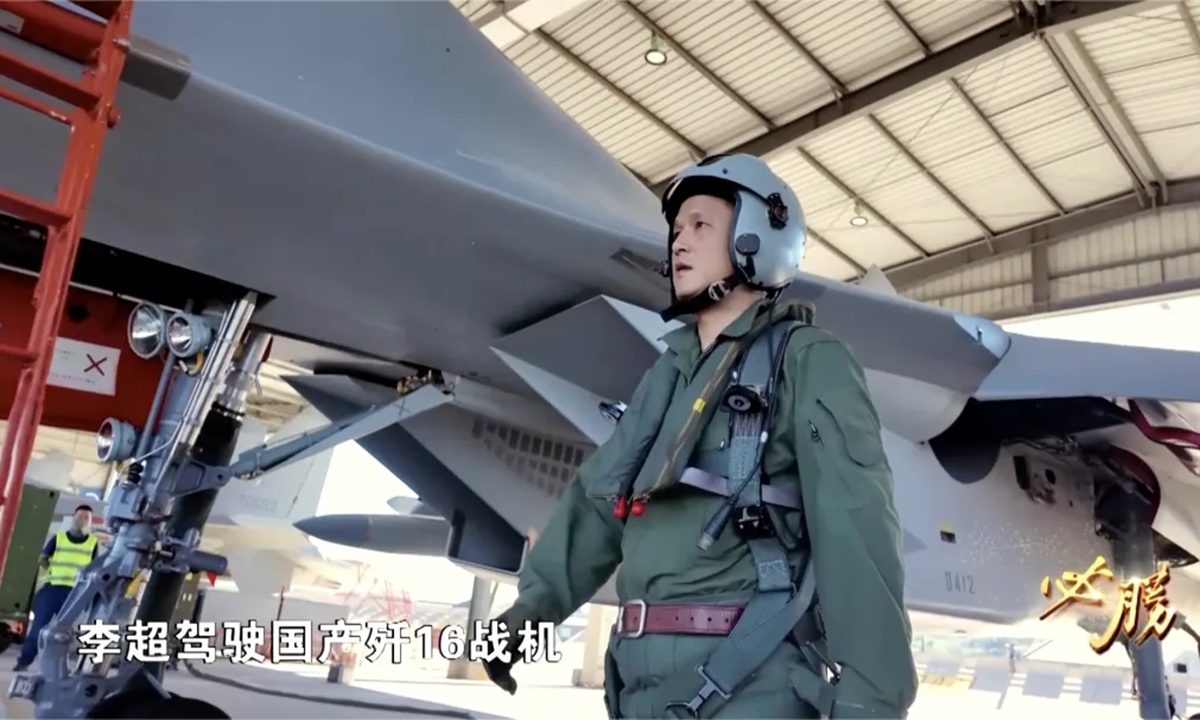
Li Chao Photo: CCTV news

Li Chao Photo: CCTV news


"My canopy was only about 10 to 15 meters away from his…" In a documentary titled Invincible about the V-Day military parade, aired Thursday on China Central Television, a pilot from the special mission aircraft formation shared his experience of driving away two foreign stealth fighter jets while flying a domestically developed J-16 fighter jet, according to CCTV news.

Li Chao, a pilot with the PLA Air Force under the Western Theater Command, encountered two foreign fighter jets during a coastal training mission in 2024. "They headed straight toward our two aircraft. Their intention was very clear—it was a provocation.With our backs to the territorial sea line, we had to intercept them."

During the first encounter, Li locked onto the foreign fighter jet. Its wingman immediately broke away at high speed, while the other foreign fighter jet exited the combat zone and locked onto Li's jet. Seizing the opportunity, Li pulled up his aircraft and executed a barrel roll, flying inverted directly above the foreign jet.

"At that moment, my canopy was just 10 to 15 meters away from his. After completing this maneuver, I simultaneously locked onto both foreign fighter jets. In the end, both aircraft withdrew," Li said. 

That was the only encounter. Since then, this type of foreign fighter jet has not been spotted again near China's coastal waters, according to CCTV.
After multiple rounds of intensive attack and defense, the foreign military aircraft were finally expelled. (Video: CCTV Military Channel) ...

Sunday, 14 September 2025

‘Make AI an ally’


AS universities grapple with regulating the use of artificial intelligence (AI) among students, a niche service sector has already emerged.

Third parties are now advertising services on e-commerce platforms to help students bypass AI detectors in their submissions.

These services, marketed as “humanising” AI-generated assignments, involve making machine-produced material sound more like it was written by an actual person. This is done by refining text, replacing overly formal phrasing with more conversational language, or weaving in personal stories and anecdotes.

Stressing the need for varsities to safeguard academic integrity, educators cautioned that this is essential to ensure that students genuinely develop the competencies and skills their qualifications claim to represent.

This, they argued, requires rethinking student assessment models, including moving away from one-off major exams, integrating continuous assessment of the learning process, and introducing formal declarations of AI use - similar to acknowledging collaboration with peers.

“When learning activities are designed to consider not just the final outcome, but also the process, the responses, and how students engage with the material, those elements can serve as meaningful forms of learning assessment,” University of the Philippines Open University (UPOU) development communication Prof Melinda dela Peña Bandalaria told StarEdu.

A former UPOU chancellor, Prof Melinda also served as president of the Asian Association of Open Universities, championing massive open online courses and open educational resources across the region.

“It is no longer just about teaching because knowledge today comes from many different sources.

“Our role is to determine the right level and type of assessment, so we can truly certify that an individual has gained the necessary competencies and skills,” she said.

Rooted in culture
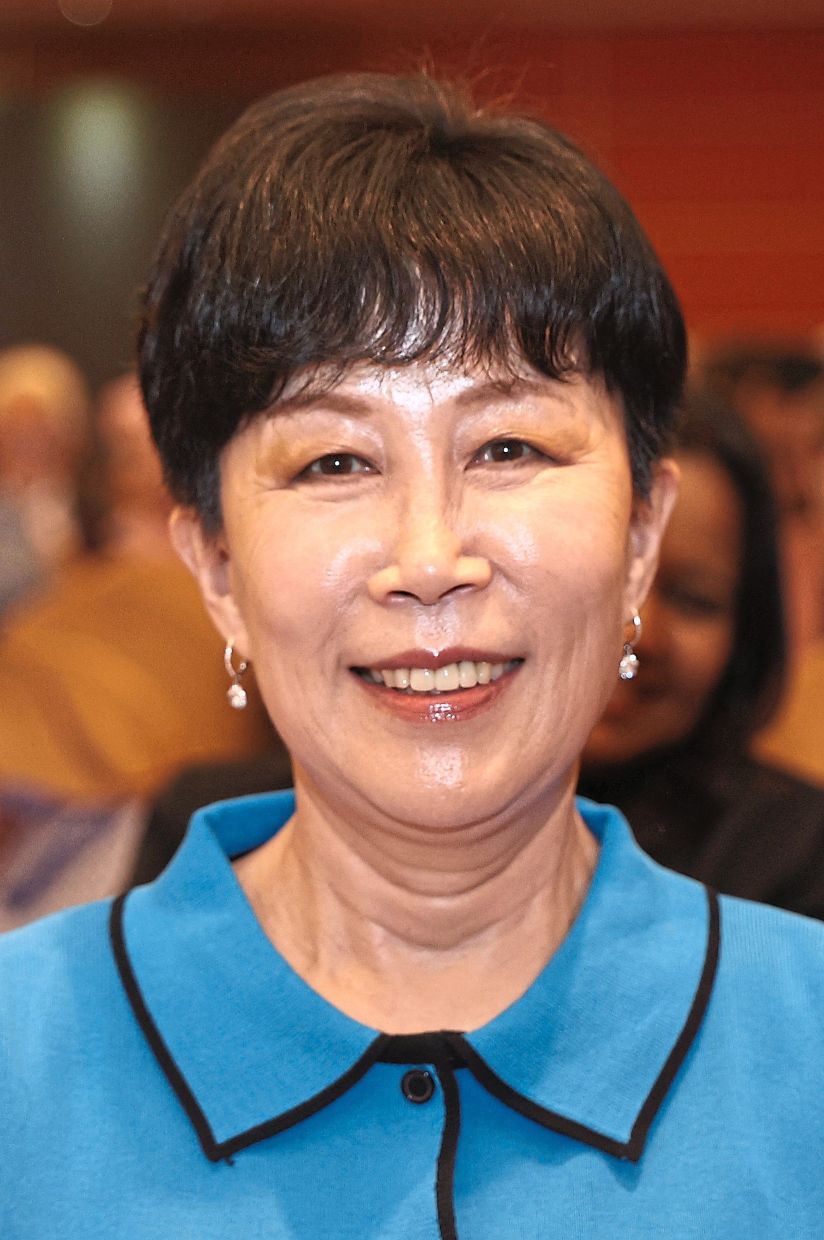
Prof JungProf JungEducation Research Institute visiting research fellow Prof Insung Jung at Seoul National University, South Korea, said students’ reliance on “humanised” AI services is closely tied to societal pressures.

“It is a universal issue, especially in societies that place a strong emphasis on achievements and admission into top universities. This pressure tends to be even stronger in Asian cultures,” she said.

The pressure, said Prof Jung - who has over three decades of experience in open, distance and digital education - is compounded by the fact that some institutions discourage AI use, pushing students to conceal it.

“Students often aim to produce quality work quickly, but then conceal their use of AI. This is partly because some education institutions discourage AI use.

“As a result, students resort to using ‘humanised’ AI responses to avoid detection,” she explained.

In contrast, she noted that Japan’s education and employment practices create a different dynamic.

“In Japan, grades matter less because companies don’t hire based on transcripts. The minimum grade requirement is only 1.0 out of 4.5.

“Whereas in Korea, if you don’t have, for example, 3.0 out of 4.5, you don’t even get to apply for jobs at companies,” said Prof Jung, who spent 19 years teaching in Tokyo, Japan.

Agreeing, University of South Africa Emeritus Prof Paul Prinsloo noted that societal norms often influence how students perceive integrity.

“Another factor is when corruption is deeply embedded in a national culture and people routinely get away with it - without naming any specific countries or regions.

“In such environments, students may grow up believing it is acceptable to pay off authorities or buy their way through life.

“This creates a distorted sense of right and wrong, as dishonesty feels justified - everyone is doing it, or they believe they will not be caught,” Prof Prinsloo, whose expertise is in open and distance e-learning, AI in education and the ethics of student data use, explained.

Focus on learning

The real issue, Prof Prinsloo highlighted, also lies in universities’ emphasis on outcomes rather than the learning journey.

“We did not prepare graduates properly. We focused too much on giving them the right answer instead of teaching them how to think and to find the answer,” he admitted, adding that the focus is now slowly shifting to the learning process.

A way forward is to integrate continuous assessment into the learning process, Prof Olaf Zawacki-Richter of University of Oldenburg, Germany, suggested.

Outsourcing assignments through student help services is relatively uncommon In Germany due to the country’s academic system, said the varsity’s Faculty of Education and Social Sciences dean.

“Students are not graded frequently as they only receive one graded project per module.

“Learning is project-based and collaborative, so lecturers can observe the students’ process step by step.

“This makes it transparent whether the students actually did the work themselves,” he said.

Even before the rise of AI, some institutions had been experimenting with alternative ways of engaging students in assessment.

Citing an example, Prof Prinsloo said some varsities require learners to evaluate their own work based on a clearly spelt-out guideline.

“Students grade their own assignments according to criteria, and then we compared their self-assessment with ours,” he explained.

Although not foolproof, the approach encouraged accountability by prompting students to reflect honestly on their performance and take ownership of their learning.

“It becomes part of their responsibility to own up and say ‘this is how well I think I did’,” he added.

Be transparent
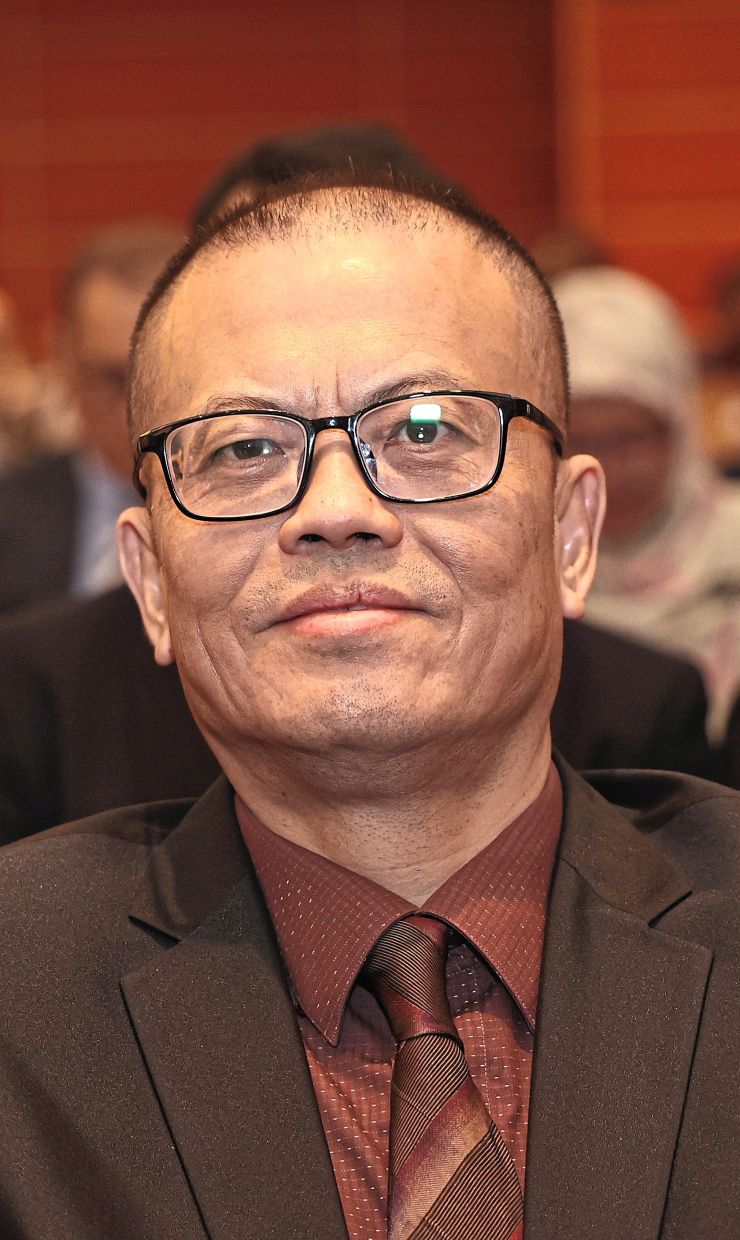
Prof XiaoProf XiaoIt is human nature to look for shortcuts, making it crucial for universities to establish mechanisms that ensure responsible use of AI, said Emeritus Prof Junhong Xiao from Open University of Shantou, China.

“Whether we like it or not, AI will be used in education.

“We, as educators, ensure that students learn to use AI responsibly,” he said.

Rather than punishing students for turning to AI, Prof Prinsloo advocated embracing it as part of the learning process.

“I want to know how they use AI. What was their process? Did they check the answer? How did they validate the answers? We should be interested in the process,” he said, emphasising that students should be encouraged to use such tools responsibly.

He also underscored the importance of transparency in learning and collaboration, cautioning that punishment of AI use could drive students to discover new ways to cheat.

“One university even has a declaration that students fill in to say, ‘I worked with a colleague or AI in this assignment.’

“We almost always punish them for working together with other students or with technology when we should be open and encourage them,” he opined.

Likewise, Prof Melinda shared that her university has already introduced an AI policy at the institutional level.

Under the policy, students are required to declare and document how they engaged with AI, such as the questions they asked, the responses they received, and how they evaluated those responses.

“We ask ‘How did you use AI in your submission’, for instance?

“They have to track the actions they have taken and document it,” Prof Melinda explained.

She, however, acknowledged the challenges of enforcement, as declarations may not always be complete or fully honest.

“Of course, it’s not a guarantee that they will declare everything, especially if they submitted something that’s completely AI-generated. We still have to reflect and guard against that,” she added.

Note: Prof Melinda, Prof Jung, Prof Xiao, Prof Prinsloo and Prof Zawacki-Richter were speakers at the Open University Malaysia “Visionary Leadership: Charting the Futures of Digital Education” public lecture on Aug 6.
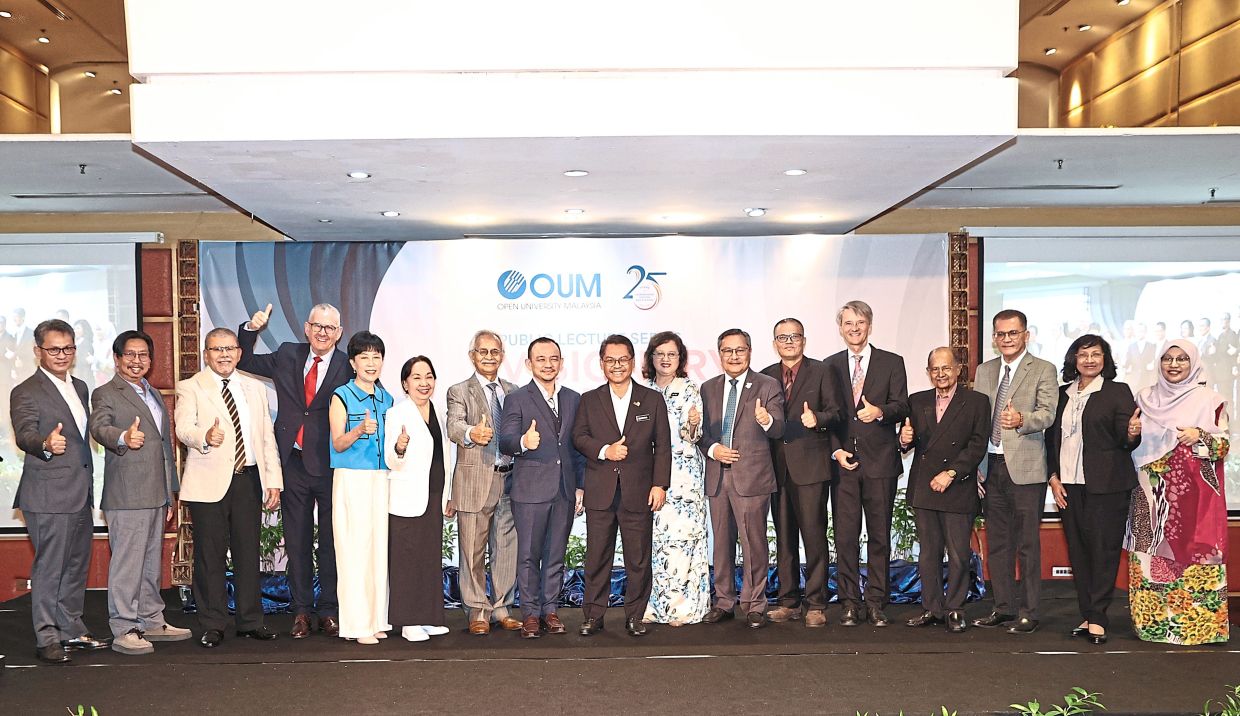
Thumbs up: Mustapha (ninth from left) with Prof Ahmad Izanee (seventh from right) with the speakers and guests at the public lectures series. - AZMAN GHANI/The StarThumbs up: Mustapha (ninth from left) with Prof Ahmad Izanee (seventh from right) with the speakers and guests at the public lectures series. - AZMAN GHANI/The Star

AI in academia

THE Higher Education Ministry is committed to preparing students for a future shaped by AI and digital transformation, says its Deputy Minister Datuk Mustapha Sakmud.

“We are improving how AI is taught and used across our universities.

“We are also building campus environments that support flexible learning, including better Internet access, modern learning spaces, and stronger support for academic staff,” he said at the Open University Malaysia (OUM) “Visionary Leadership: Charting the Futures of Digital Education” public lecture on Aug 6.

Held at a hotel in Kuala Lumpur, the free public lecture series was organised in conjunction with the varsity’s 25th anniversary.

Also present were higher education director-general Prof Dr Azlinda Azman, and OUM president and vice-chancellor Prof Dr Ahmad Izanee Awang.

Subsequently, in a parliamentary reply on Aug 26, Mustapha said the ministry has outlined several measures to address the use of AI in academic writing, namely:

Developing guidelines for AI use in higher education.

Monitoring and regulating practices at the institutional level.

Revising assessment and evaluation methods.

Strengthening teaching and learning approaches that support higher-order thinking skills.

Providing training and professional development.

Upholding a firm commitment to academic integrity.

Ensuring all new and existing courses will include AI-related elements starting from 2025.

Mainstreaming the integration of AI into curricula through an “embedded AI” approach across study programmes, according to the needs of each discipline, such as engineering, technology, social sciences, and service-related fields.

Related posts:

AI and job transformation in Malaysia: What's next?


Related news:


The transition from “making AI talk” to “making AI work” is the next frontier of AI commercialization. Could China, with its advantages in AI application, technology and policy support, be a global testing ground for such a transition?


Source link https://www.thestar.com.my/news/education/2025/09/14/make-ai-an-ally