Freedom, GEABSOLUTE POWERS CORRUPT ABSOLUTELY, General Election (GE15), Malaysia, Politics, polling Nov 19: Destroy Umno for the betterment of Malaysia, race, religion, Solidality, support Aliran for Justice

Share This

Showing posts with label Wong Chun Wai. Show all posts

Monday, 17 November 2025

When fraud pays on Facebook


 Giant greed: According to internal documents reviewed by Reuters, Meta projected that roughly 10% of its 2024 revenue – around US$16bil – came from advertisements tied to scams, banned goods and other fraudulent content. — Reuters

Fake content and scam advertisements are a bane on social media. But it gets worse when platform owners actively allow such content just to make millions.

A MONTH ago, I found a video of myself on social media promoting an investment scam promising huge returns.

I was flabbergasted and horrified. The content looked like a TV interview I had given sometime back.

The difference was that my voice had been altered, using artificial intelligence (AI) skills, to talk about investment opportunities.

The original content was on human capital and the importance of training. The modified content, using the AI version of my voice, sounded just like the real thing. It was so good it was hard to tell the difference.

I do not know why I was chosen by these scammers as I do not see my unsolicited endorsement to be of any real value.

But this is the story. I filed a complaint with Facebook on Oct 1 and they replied on Oct 8, thanking me for the report.

“We use a combination of technology and human reviewers and identify content that goes against our Community Standards. In this case, we did not remove the content that you reported,” the reply said.

As I wrote this article, I re-checked and found the content still floating around on FB, promising that “every Malaysian who invests from RM1,200 is guaranteed to earn at least RM210,000 in the first month!” It adds: “Limited spots available.”

In short, Facebook owner Meta did not see anything wrong with the fake content using my face and voice to cheat people. Meta’s reply was mind-boggling and made me feel helpless about combating such fraud.

Last week, Datuk Seri Michael Chong cautioned the public against fraudulent schemes that employ AI to replicate the faces and voices of the Prime Minister and Yang di-pertuan Agong to dupe unsuspecting individuals.

The MCA Public Service and Complaints Bureau chief said he had identified two online advertisements featuring the PM and King. When they were reported, the ads were removed, but the syndicate had re-uploaded similar content, this time using the face sofa nm panda prominent business figure.

Using AI, the syndicate created investment advertisements requiring a payment of RM1,100 while promising returns of up to RM200,000.

Why did Facebook fail to act? Well, we may know now. An investigation by Reuters has cast a harsh light on the business practices of Meta Platforms Inc, the parent company of Facebook, Instagram, and Whatsapp.

According to internal documents reviewed by Reuters, Meta projected that roughly 10% of its 2024 revenue – around Us$16bil (Rm66.72bil) – came from advertisements tied to scams, banned goods, and other fraudulent content.

What is deeply troubling is that the documents suggest that Meta’s enforcement efforts against these bad actors were intentionally limited, constrained by “revenue guardrails” and automated systems that only block ads when there is at least a 95% certainty of fraud.

For Malaysia and for users of social media everywhere, the implications are profound.

This is not just about one tech giant’s failure; it is about the structural tensions between platform profit models and user protection, and the regulatory void that allows serious harm to happen.

In Malaysia, the Malaysian Communications and Multimedia Commission has already expressed alarm, noting that some of that revenue could stem from Malaysian-market ads, and has summoned Meta for answers.

Allowing platforms to be used for such scams and profiting from it makes Meta an accomplice to such cybercrimes.

These platforms should be held to account for the content they host and monetise.

If a platform is earning money from fraud-linked ads, that raises questions of complicity, not just oversight failure.

When a company’s business model allows or even subtly incentivises questionable advertisers, that means it does not value ethics.

It has been reported that Meta internally estimated the scale of “high-risk” scam advertisements at Us$15bil (Rm61.9bil) of such ads per day across its platforms.

The company’s justification is that it will only block advertiser accounts when automated systems are 95% sure the advertiser is engaging in fraud.

If it is not absolutely certain, it just charges them higher ad rates – effectively profiting from uncertainty.

In my case, despite my protest, we can assume that Meta did not find enough evidence that it was a fraud.

It was a case of “looks like you, sounds like you but we are not sure it’s a fraud despite your complaint”.

A Reuters report on Nov 11 said that “Meta knowingly profits off of them” – meaning the social media giant knew about ads for fake products and scam posts and projected that it could earn up to Us$16bil from running these ads featuring banned goods or scamming posts.

Meta is so powerful that it can snub protests and calls from regulators requiring it to publish clear data on scam advertising volumes and the ad revenue derived from them.

If the company doesn’t have any ethics why would it care two hoots about accountability? It knows the world is addicted to its products.

Responsibility does not seem to exist in the company statement.

The only way out is to teach Malaysians how to identify scam ads, report suspicious content, and hold platforms and advertisers to account.

Digital literacy is a frontline defence, and also, simply stop being greedy. If it sounds too good to be true, then it’s a scam.

Meta knows we are hooked on Whatsapp, Instagram and Facebook, and the world will not function a day without these products. It is untouchable.

We have miserably consented and surrendered all our personal data to Meta to use these products for free.

Now you know why and how these scammers get our details. Meta is enriching itself, and each time regulators want to haul it up, it cries that it’s an assault on the platforms.
Wong Chun Wai

Wong Chun Wai

Wong Chun Wai began his career as a journalist in Penang, and has served The Star for over 35 years in various capacities and roles. He is now group editorial and corporate affairs adviser to the group, after having served as group managing director/chief executive officer. On The Beat made its debut on Feb 23 1997 and Chun Wai has penned the column weekly without a break, except for the occasional press holiday when the paper was not published. In May 2011, a compilation of selected articles of On The Beat was published as a book and launched in conjunction with his 50th birthday. Chun Wai also comments on current issues in The Star.

When fraud pays on Facebook


 Giant greed: According to internal documents reviewed by Reuters, Meta projected that roughly 10% of its 2024 revenue – around US$16bil – came from advertisements tied to scams, banned goods and other fraudulent content. — Reuters

Fake content and scam advertisements are a bane on social media. But it gets worse when platform owners actively allow such content just to make millions.

A MONTH ago, I found a video of myself on social media promoting an investment scam promising huge returns.

I was flabbergasted and horrified. The content looked like a TV interview I had given sometime back.

The difference was that my voice had been altered, using artificial intelligence (AI) skills, to talk about investment opportunities.

The original content was on human capital and the importance of training. The modified content, using the AI version of my voice, sounded just like the real thing. It was so good it was hard to tell the difference.

I do not know why I was chosen by these scammers as I do not see my unsolicited endorsement to be of any real value.

But this is the story. I filed a complaint with Facebook on Oct 1 and they replied on Oct 8, thanking me for the report.

“We use a combination of technology and human reviewers and identify content that goes against our Community Standards. In this case, we did not remove the content that you reported,” the reply said.

As I wrote this article, I re-checked and found the content still floating around on FB, promising that “every Malaysian who invests from RM1,200 is guaranteed to earn at least RM210,000 in the first month!” It adds: “Limited spots available.”

In short, Facebook owner Meta did not see anything wrong with the fake content using my face and voice to cheat people. Meta’s reply was mind-boggling and made me feel helpless about combating such fraud.

Last week, Datuk Seri Michael Chong cautioned the public against fraudulent schemes that employ AI to replicate the faces and voices of the Prime Minister and Yang di-pertuan Agong to dupe unsuspecting individuals.

The MCA Public Service and Complaints Bureau chief said he had identified two online advertisements featuring the PM and King. When they were reported, the ads were removed, but the syndicate had re-uploaded similar content, this time using the face sofa nm panda prominent business figure.

Using AI, the syndicate created investment advertisements requiring a payment of RM1,100 while promising returns of up to RM200,000.

Why did Facebook fail to act? Well, we may know now. An investigation by Reuters has cast a harsh light on the business practices of Meta Platforms Inc, the parent company of Facebook, Instagram, and Whatsapp.

According to internal documents reviewed by Reuters, Meta projected that roughly 10% of its 2024 revenue – around Us$16bil (Rm66.72bil) – came from advertisements tied to scams, banned goods, and other fraudulent content.

What is deeply troubling is that the documents suggest that Meta’s enforcement efforts against these bad actors were intentionally limited, constrained by “revenue guardrails” and automated systems that only block ads when there is at least a 95% certainty of fraud.

For Malaysia and for users of social media everywhere, the implications are profound.

This is not just about one tech giant’s failure; it is about the structural tensions between platform profit models and user protection, and the regulatory void that allows serious harm to happen.

In Malaysia, the Malaysian Communications and Multimedia Commission has already expressed alarm, noting that some of that revenue could stem from Malaysian-market ads, and has summoned Meta for answers.

Allowing platforms to be used for such scams and profiting from it makes Meta an accomplice to such cybercrimes.

These platforms should be held to account for the content they host and monetise.

If a platform is earning money from fraud-linked ads, that raises questions of complicity, not just oversight failure.

When a company’s business model allows or even subtly incentivises questionable advertisers, that means it does not value ethics.

It has been reported that Meta internally estimated the scale of “high-risk” scam advertisements at Us$15bil (Rm61.9bil) of such ads per day across its platforms.

The company’s justification is that it will only block advertiser accounts when automated systems are 95% sure the advertiser is engaging in fraud.

If it is not absolutely certain, it just charges them higher ad rates – effectively profiting from uncertainty.

In my case, despite my protest, we can assume that Meta did not find enough evidence that it was a fraud.

It was a case of “looks like you, sounds like you but we are not sure it’s a fraud despite your complaint”.

A Reuters report on Nov 11 said that “Meta knowingly profits off of them” – meaning the social media giant knew about ads for fake products and scam posts and projected that it could earn up to Us$16bil from running these ads featuring banned goods or scamming posts.

Meta is so powerful that it can snub protests and calls from regulators requiring it to publish clear data on scam advertising volumes and the ad revenue derived from them.

If the company doesn’t have any ethics why would it care two hoots about accountability? It knows the world is addicted to its products.

Responsibility does not seem to exist in the company statement.

The only way out is to teach Malaysians how to identify scam ads, report suspicious content, and hold platforms and advertisers to account.

Digital literacy is a frontline defence, and also, simply stop being greedy. If it sounds too good to be true, then it’s a scam.

Meta knows we are hooked on Whatsapp, Instagram and Facebook, and the world will not function a day without these products. It is untouchable.

We have miserably consented and surrendered all our personal data to Meta to use these products for free.

Now you know why and how these scammers get our details. Meta is enriching itself, and each time regulators want to haul it up, it cries that it’s an assault on the platforms.

Wong Chun Wai

Wong Chun Wai

Wong Chun Wai began his career as a journalist in Penang, and has served The Star for over 35 years in various capacities and roles. He is now group editorial and corporate affairs adviser to the group, after having served as group managing director/chief executive officer. On The Beat made its debut on Feb 23 1997 and Chun Wai has penned the column weekly without a break, except for the occasional press holiday when the paper was not published. In May 2011, a compilation of selected articles of On The Beat was published as a book and launched in conjunction with his 50th birthday. Chun Wai also comments on current issues in The Star.

Saturday, 6 September 2025

Exploring rocket town Hainan, China's gateway to space

The writer at the lobby of Hilton Wenchang where models of Chinese rockets were set up for sale. — Photos: FLORENCE TEH

A call from a Beijing-based Chinese journalist friend came suggesting I should make a quick trip to Hainan, China’s southernmost island province, to watch a rocket launch.

“Hainan is just a few hours away from Kuala Lumpur, so here’s your chance to see a real rocket blast. You don’t have to travel all the way to the United States or Russia to see this,’’ he said.

The only problem was that he could not give me the exact date of the lift off as he couldn’t find the details. He apologised and said that the Chinese authorities were often secretive of such information and that the best way to find out was to call up the hotels by the beach, facing the Wenchang space launch site.

When I approached my local travel agent, she was of no help as she had no idea there were rocket ascents in Hainan, but she did promise to call her Hainan counterpart.  

A few days later, the agent called back to say that most of the launch crew had made bookings for a week at the Hilton Wenchang.

“It is most likely that during that one week, the rocket would be launched. You just have to take your chances,’’ the agent said.

Now, there was no way I could book a room there for a week, as the rates had gone up by quite a bit during that period, so an urgent call was made to Beijing again.

More calls and WeChat messages were exchanged and soon, it was narrowed down to three possible dates, with the launch time likely to be at 8.30pm.

That seemed reasonable as I would be able to explore Hainan – dubbed the “Hawaii of China” as it is well-known for its palm-fringed beaches, coconut groves, and luxury resorts – during the day and be back at the hotel in the evenings.

Hainan has long been a destination for vacationers seeking sun, sea, and serenity with its white sand coastlines and subtropical forests.

But unknown to the world, except in China, Hainan is actually fast gaining a reputation as a world-class spaceport, with space tourism as one of its main products.

My wife and I arrived in Hainan via AirAsia, which flies direct from KLIA Terminal 2, hoping to see the countdowns and launch pads.

“You must get a balcony room with a beach view, and just watch the awesome sights and sounds from the room. It will be the best view. That way, you don’t have to jostle with the crowds who will gather at the public beach,’’ my reporter friend reminded me.

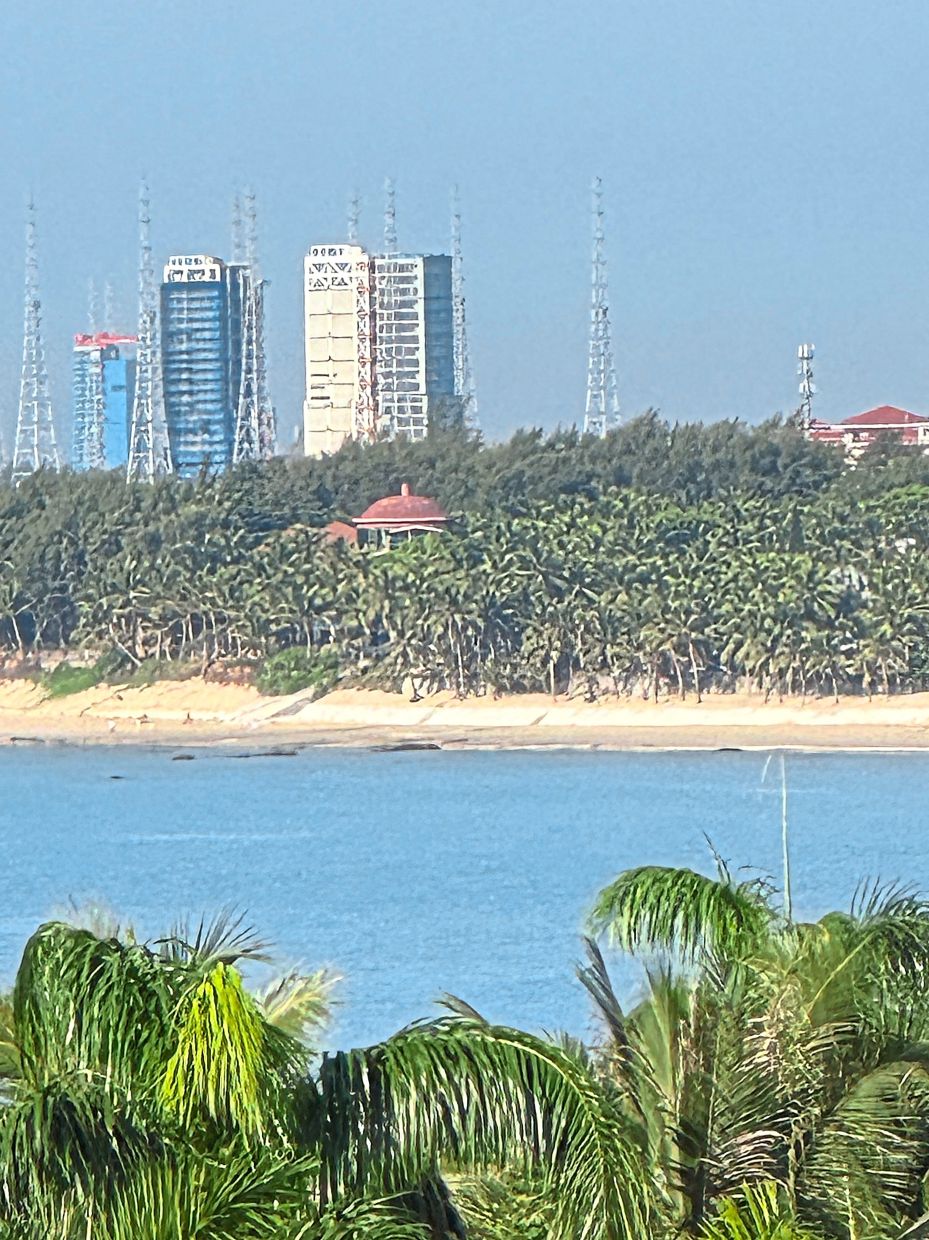
White beaches, palm trees and the rocket launch pad. A perfect view from the balcony of Wenchang Hilton in Hainan, China.White beaches, palm trees and the rocket launch pad. A perfect view from the balcony of Wenchang Hilton in Hainan, China.

To ensure my dates were when the launch was “most likely to happen”, he doubled-checked with his colleagues in the Hainan bureau, and they assured him that it was on and that “it will happen”.

The Wenchang Space Launch Centre, operational since 2016, is the only coastal launch site in China. Most launches take place in desert sites.

The Hainan location allows for the launch of the country’s largest and heaviest rockets – like the Long March 5, which carries modules for China’s Tiangong Space Station and deep-space missions to the Moon and Mars.

Unlike many space facilities around the world, Wenchang’s launch pads are remarkably accessible.

There’s a public beach that’s just a short walk away from the main launch site, where curious onlookers and local families gather to watch the countdowns, to hear the engines roar to life, and to see the rockets pierce through the sky in dazzling displays.

The anticipated day finally came. Roads were sealed. Only vehicles ferrying registered hotel guests were allowed entry into the hotel area.

Space workers in their uniforms were seen walking around the lobby and restaurants. My wife, who speaks Mandarin, asked if the launch would happen. Their lips were sealed but they sportingly smiled and nodded their heads.

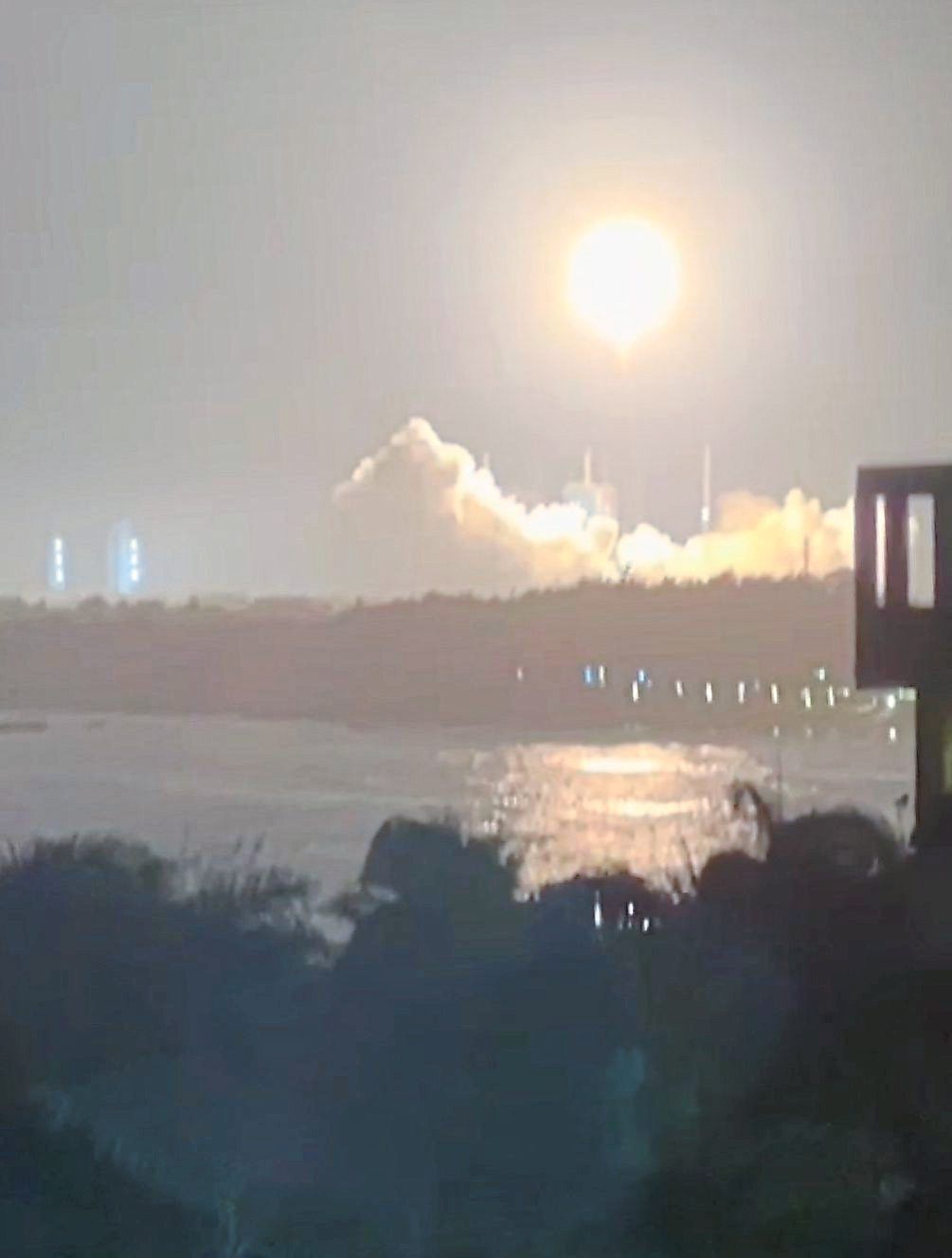
The rocket lift-off event at Wenchang, as seen from the writer’s hotel balcony.The rocket lift-off event at Wenchang, as seen from the writer’s hotel balcony.

The hotel had set up a counter selling miniature rockets, badges and other souvenirs, which was another sign that the launch was on.

There were rocket models in the lobby, and the afternoon tea served cakes and other sweet treats in the shape of astronauts and spacecrafts, though for a pricey RM200.

By 2pm, locals arrived at the public beach with folding chairs and picnic baskets, turning the shoreline into a festive arena. Children waved flags and tourists scrambled for the best camera angles.

Finally, on Aug 22 at 8.25pm, I looked at the balconies next to our room and saw that they were already filled with guests.

Then, the countdown began. When it hit zero, a thunderous roar filled the air. The rocket lifted slowly at first, then accelerated into the clouds, leaving behind a huge column of fire and a trail of awestruck gasps.

It was loud and hot, yet completely unforgettable. I couldn’t believe how close we were to seeing it all. There was no need for binoculars or distant observation decks.

What I also found unbelievable was that there was only a short mention of the launch on the local TV news channel that evening.

One of the hotel restaurant workers, a local, shrugged at my excitement, saying the rocket launches were mainly satellites by the private sector, and that these take place every few months.

A check online indeed showed three launches this year and many locals were no longer excited about these events, “except for the out-of-town local tourists”. My wife and I were the only foreign guests at the hotel.

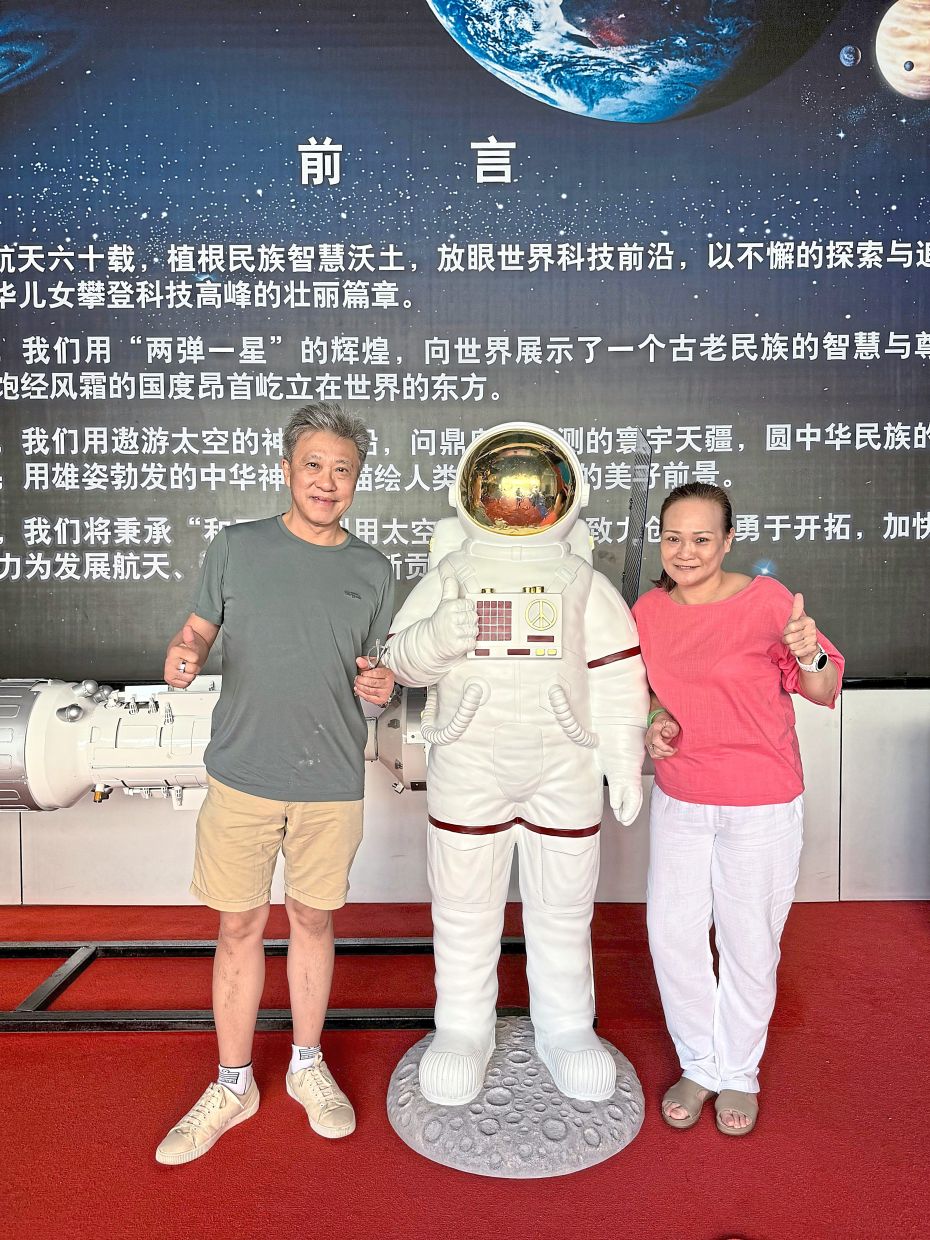
The writer with his wife, Datin Seri Florence Teh at the Aeronautics City in Hainan.The writer with his wife, Datin Seri Florence Teh at the Aeronautics City in Hainan.

A record was set between July 30 and Aug 4, when “two launches were carried out within five days”, according to reports.

One big attraction that awaits public opening is the Hainan Science Museum, also called the Hainan Science and Technology Museum, in Haikou. Here, there are galleries within the futuristic six-storey building displaying space technology, ocean science, and mathematics, as well as a few interactive zones.

The design of the building resembles an “updraft” (rising warm air current), with fluid, cloud-like shapes, inspired by Hainan’s tropical rainforests and futurism, according to news reports.

But for now, tourists only have the Astronautics City to visit, which is a modest museum but decent enough.

Since we were already in Wenchang, a quiet “rocket town”, we had to try its Wenchang chicken, a dish so famous it inspired the Malaysian favourite, Hainanese chicken rice.

My verdict? Well, we may be light years behind China in terms of rocket science but as a consolation, our Hainanese chicken rice is way, way better!

The steamed chicken in Hainan is tough as they are free-range chickens. They do not have our chilli sauce as a condiment nor do they use thick caramel soy sauce. The steamed chicken is also pretty plain and dry, really.

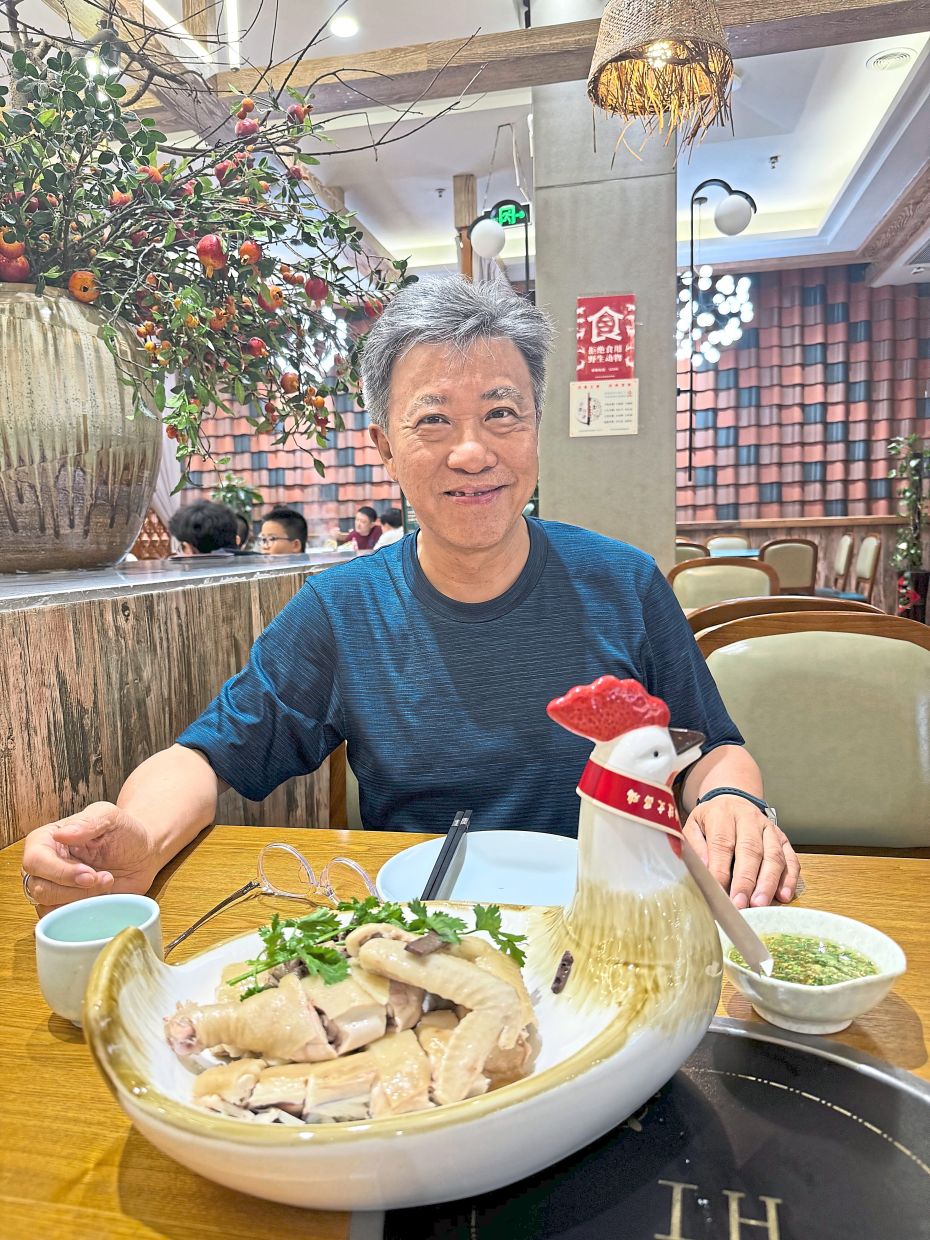
One simply has to try the chicken rice in Hainan as that's where it originated, but the writer still prefers Malaysian chicken rice.One simply has to try the chicken rice in Hainan as that's where it originated, but the writer still prefers Malaysian chicken rice.

What about durians in Hainan? No, it’s not going to happen for a long, long time as they still rely on imported Thai durians.

Haikou, the capital of Hainan, is also known for its Instagram-friendly colonial-era buildings at Qilou Old Street, reflecting both European and Chinese influences, and restaurants.

Further south, the more well-known resort cities like Sanya offer five-star luxury, snorkelling, and rainforest hikes.

But for Malaysians, all these will not really excite most of us ... but seeing a rocket lift off in front of our eyes is definitely worth experiencing.

Hainan is just a little over three hours by flight from KL and not many realise that the place is geographically the closest Chinese province to Malaysia.

Haikou’s Qilou Old Street is a charming town with colonial-style buildings.Haikou’s Qilou Old Street is a charming town with colonial-style buildings.

Related stories: