Freedom, GEABSOLUTE POWERS CORRUPT ABSOLUTELY, General Election (GE15), Malaysia, Politics, polling Nov 19: Destroy Umno for the betterment of Malaysia, race, religion, Solidality, support Aliran for Justice

Share This

Wednesday, 31 December 2025

Tech war endgame


THROUGHOUT this year, the most incessant and pernicious concern most countries share has been Washington’s “reciprocal” tariffs.

The fact that Donald Trump hit the whole world with tariffs since returning to office in January assured him of global attention, but of the negative sort.

Grabbing world headlines while confounding critics was classic Trump. The surprise came in how spiralling US tariffs against China were abruptly deflected onto the rest of the world instead.

That resulted from what must have been a surprise to the Trump administration itself: tariffs on China were suddenly halted in their tracks when Beijing hit back with counter-tariffs of its own.

Moral of the story: respond innovatively, don’t just succumb. Pull some surprises of your own.

Trump 2.0’s tariffs had another unintended consequence – lumping allies, partners and everyone else together with its perceived adversaries. This assertion of hard power came at the expense of its soft power and international credibility.

The US had underestimated China’s capacity again. Multiple examples abound of how two can play Trump’s game of trade shock and awe.

This is by now a standard principle of Us-china rivalry: squeeze Beijing hard, and get an unintended and opposite effect. The lesson was never learned – tariffs, sanctions and bans have only spurred China to achieve more and grow stronger.

From its own International Space Station Tiangong and the world’s first moon landing on the far side to breakthroughs in quantum computing and nuclear fusion technology, China’s gains have multiplied when challenged. And the US appears all set to continue this unwitting “assistance”.

The Deepseek moment when China achieves equivalent or better success with higher value, in less time, and at lower cost has become almost routine. Deepseek itself was followed by Moore Threads, whose billion-dollar status, early IPO and massive oversubscription on opening day thrashed all its Western peers by a stunning factor of several thousand.

Among China’s more recent technological feats is Shenzhen’s Extreme Ultra-violet (EUV) lithography prototype. This triumph against the odds came despite, or rather because of, the US ban on sales of EUV machines to China.

It followed the familiar and flawed assumption that China cannot build competitive technology of its own. This myth persists despite repeated warnings from tech industry leaders in the West.

Former ASML CEO Peter Wennink had predicted that Us-led Western pressure against China’s technological development would only backfire by massaging its STEM prowess. Nvidia CEO Jensen Huang observed that China was only ‘nanoseconds’ behind in making the world’s most advanced chips.

Nvidia designs high-end chips made by Taiwan’s TSMC with ASML’S EUV equipment from the Netherlands. The US has tried hard to keep China out of this vital supply chain, but with steadily diminishing success.

Such futility stems from failure to appreciate the interconnectedness of global industry and all its implications, and not least China’s already considerable capacity galvanised by its irrepressible will to succeed. The condescending attitude that “China can only copy, not innovate” adds to its determination to beat all the odds.

Prior to China’s launch of the Asian Infrastructure Investment Bank (AIIB) a decade ago, US cynics said China had nobody competent to run it. But it appointed founding President Jin Liqun, a respected professor and senior veteran of the World Bank, the Asian Development Bank and China’s Finance Ministry.

It happened again with Deepseek and Moore Threads, under their founding CEOS Liang Wenfeng and James Zhang. Since the Western commentariat had not heard of them, the capacity they represented was deemed non-existent.

Yet a 23-year-old Liang was already leading his Chinese team in collecting data on financial markets while the US was struggling with the Great Recession of 2008. Zhang is a 14-year veteran of Nvidia and its former Vicepresident.

Another shock to the West came with the Shenzhen EUV prototype passing all its scheduled tests. Among its lead scientists is Lin Nan, former head of ASML’S photolithography department key to making the world’s most powerful chips.

China is also experimenting with graphene and photonic chips, potentially leapfrogging today’s silicon-based versions by multiple generations. Meanwhile a gushing ‘brain drain’ of tech talent from the West to China approximates to a flood.

After Chinese nationals in toptier Western corporations and institutions returned to China, ethnic Chinese from the diaspora followed, then skilled Westerners migrated as well. The US Congress sounded the alarm and called for reversing the trend, but to no avail.

Migrating scientists are not just attracted by generous new contracts. US agencies are imposing damaging cuts in R&D funding and tough visa restrictions on foreign talent.

Asians are particularly affected after being made to feel unwelcome in the US socially, politically and professionally. The US tally of own goals continues to see a scoring spree.

The tariffs are Washington’s threat to tax itself unreasonably. Savvy countries calling its bluff remain free to develop their own inventiveness, with fresh resilience and leverage as accompaniment.

BUNN NAGARA Bunn Nagara is director and senior fellow at the 

Renaissance Strategic Research Institute and Honorary Fellow of the Perak Academy. The views expressed here are solely the writer’s own.
The Star Malaysia


Related


 2025 in Review with Professor Martin Jacques

Wednesday, 17 December 2025

Malaysia PM Anwar makes sweeping Cabinet changes, including new trade and economy ministers

 The premier announced more than 25 changes to his Cabinet after previously saying that a major reshuffle was not on the cards.

Anwar Announces 28 Appointments, Portfolio Changes

 These are results for THE UNITY CABINET 2025,

Search instead for THE UNITYT CABINET 2025,

The premier announced more than 25 changes to his Cabinet after previously saying that a major reshuffle was not on the cards.

Anwar Announces 28 Appointments, Portfolio Changes


Malaysia Prime Minister Anwar Ibrahim shows a list of his Cabinet appointments after announcing a reshuffle on Dec 16, 2025. (Photo: Prime Minister’s Office of Malaysia/Afiq Hambali)

KUALA LUMPUR: Malaysian Prime Minister Anwar Ibrahim announced sweeping changes to his Cabinet on Tuesday (Dec 16), ending weeks of speculation over ministerial vacancies.

Notable changes - among more than 25 announced - include the appointments of United Malays National Organisation (UMNO) stalwart Johari Ghani as the new Investment, Trade and Industry Minister and Parti Keadilan Rakyat’s (PKR) Akmal Nasir as Economy Minister. There are 65 Cabinet posts in total. 

Johari was previously Minister for Plantations and Commodities while Akmal was Deputy Minister of Energy Transition and Water Transformation. 

A composite image of newly-appointed investment, trade and industry minister Johari Ghani (left) and economy minister Akmal Nasir (right). (Photos: Facebook/Johari Abdul Ghani, Facebook/Akmal Nasir)

During the internal PKR polls in May, Akmal was seen as closely aligned to Rafizi Ramli, who resigned as Economy Minister after he was defeated by Anwar’s daughter Nurul Izzah in a contest to be the party’s deputy president. 

UMNO is an ally of Anwar’s Pakatan Harapan (PH) ruling coalition, and the investment, trade and industry portfolio was previously held by Tengku Zafrul Aziz, who was an UMNO member before leaving the party to join the prime minister’s PKR. 

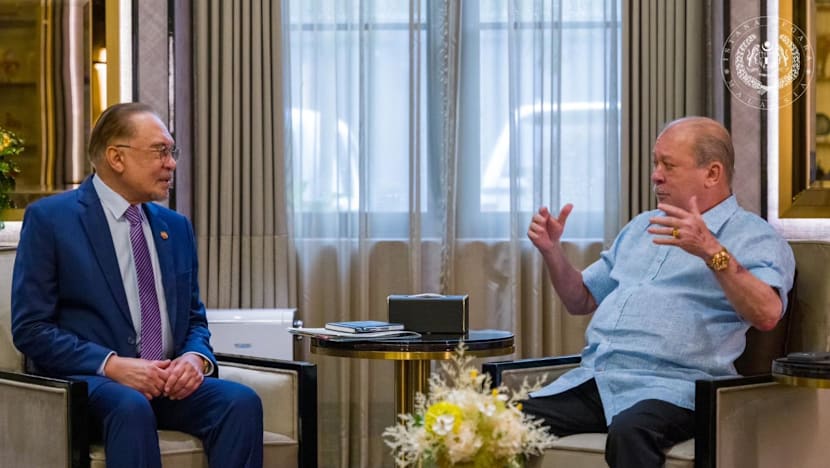
Malaysia Prime Minister Anwar Ibrahim held a meeting with Malaysian king Sultan Ibrahim Sultan Iskandar at Istana Bukit Tunku in Kuala Lumpur on Dec 16, 2025. (Photo: Facebook/Sultan Ibrahim Sultan Iskandar)

Speaking at the start of the press conference before he announced the changes, Anwar said: “There is a need to make some changes so that we have a Cabinet that works as a team, to focus on achieving higher economic growth and solving people's problems.” 

He had met the king Sultan Ibrahim Sultan Iskandar on Tuesday morning, and said in a Facebook post in the afternoon that he would make an announcement on the Cabinet at 3.30pm that day.

Among the changes he announced, Arthur Josep Kurup of the United Sabah People’s Party was appointed Natural Resources and Environmental Sustainability Minister, PKR vice-president R Ramanan was appointed Human Resources Minister while head of UMNO women’s wing Noraini Ahmad was appointed Minister for Plantations and Commodities. 

Democratic Action Party’s (DAP) Hannah Yeoh was reassigned from her Minister for Youth and Sports portfolio to be Minister in the Prime Minister’s Department (Federal Territories), with PKR’s Taufiq Johari taking her place.   

PKR’s Mustapha Mohd Yunus Sakmud was appointed Minister for Sabah and Sarawak while DAP’s Steven Sim was reassigned from his Human Resources portfolio to be Minister for Entrepreneur Development and Cooperatives. 

Senator and Islamic scholar Zulkifli Hasan was appointed Minister for Religious Affairs. 

The changes to Anwar’s Cabinet - including full minister and deputy minister positions - saw some members being reassigned while others were new appointments. 

Full ministers who were dropped completely from the line-up included PKR’s Zaliha Mustafa who was Minister in the Prime Minister’s Department (Federal Territories) and Minister for Religious Affairs Mohd Na’im Mokhtar. 

Na'im's exclusion was a surprise as he was sworn in as a senator for a second term on Dec 3. 

Notably, Malaysia's Education Minister Fadhlina Sidek retained her post despite facing criticism for her perceived lack of action and slow response on serious school issues like bullying, with student deaths triggering public outcry for her to resign. 

Earlier this month, three ministers were also sworn in as senators for a second term. Besides Na'im, they included Home Minister Saifuddin Nasution Ismail and Higher Education Minister Zambry Abdul Kadir. 

A minister in Malaysia must be an elected member of parliament (MP) in the lower house or an appointed senator in the upper house. 

On Dec 1, Anwar had said that a major reshuffle of his Cabinet is not on the cards, noting that his administration will “only function for a year plus” as Malaysia’s next general election is due by February 2028. 

However, there was speculation that changes to his Cabinet were imminent, with Tengku Zafrul stepping down from his Investment, Trade and Industry Minister portfolio earlier this month, creating a fourth ministerial vacancy. 

Tengku Zafrul had served for two terms as a senator since 2020. He held the trade minister post throughout his term in the Senate, which is the maximum period allowed.

Nik Nazmi Nik Ahmad had resigned as the Natural Resources and Environmental Sustainability Minister in May, while Ewon Benedick resigned as the Entrepreneur Development and Cooperatives Minister in November, ahead of the Sabah state elections.

Ewon had resigned over disagreements with the federal government on issues related to Sabah’s 40 per cent entitlement of federal net revenue derived from the state. 

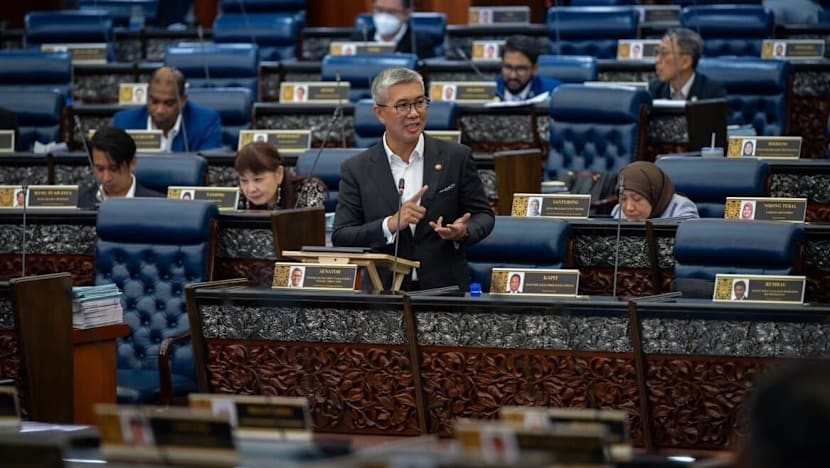
Former trade minister Tengku Zafrul Abdul Aziz on his last day in the Dewan Rakyat. (Photo: Instagram/@tzafrul_aziz)

Meanwhile, like Rafizi, Nik Nazmi had resigned following defeat in party elections within PKR.

Second Finance Minister Amir Hamzah took over the economy portfolio in the interim while Johari Ghani helped to handle natural resources and environment sustainability.

Ewon’s former portfolio was being managed by works minister Alexander Nanta Linggi starting Dec 3, local media reported.

9GbOWPjY2DPzPHHFSchEQyw9cpwvdr2RlfNrP5cal_X8nyk22R77vR2eQrAovbzVXTCfdiRwx6qoWO4zoTtXeF0zTGgYGtr1RWPMb-tW0" style="margin-left: 1em; margin-right: 1em;">
Malaysia Prime Minister Anwar Ibrahim shows a list of his Cabinet appointments after announcing a reshuffle on Dec 16, 2025. (Photo: Prime Minister’s Office of Malaysia/Afiq Hambali)

KUALA LUMPUR: Malaysian Prime Minister Anwar Ibrahim announced sweeping changes to his Cabinet on Tuesday (Dec 16), ending weeks of speculation over ministerial vacancies.

Notable changes - among more than 25 announced - include the appointments of United Malays National Organisation (UMNO) stalwart Johari Ghani as the new Investment, Trade and Industry Minister and Parti Keadilan Rakyat’s (PKR) Akmal Nasir as Economy Minister. There are 65 Cabinet posts in total. 

Johari was previously Minister for Plantations and Commodities while Akmal was Deputy Minister of Energy Transition and Water Transformation. 

A composite image of newly-appointed investment, trade and industry minister Johari Ghani (left) and economy minister Akmal Nasir (right). (Photos: Facebook/Johari Abdul Ghani, Facebook/Akmal Nasir)

During the internal PKR polls in May, Akmal was seen as closely aligned to Rafizi Ramli, who resigned as Economy Minister after he was defeated by Anwar’s daughter Nurul Izzah in a contest to be the party’s deputy president. 

UMNO is an ally of Anwar’s Pakatan Harapan (PH) ruling coalition, and the investment, trade and industry portfolio was previously held by Tengku Zafrul Aziz, who was an UMNO member before leaving the party to join the prime minister’s PKR. 

Malaysia Prime Minister Anwar Ibrahim held a meeting with Malaysian king Sultan Ibrahim Sultan Iskandar at Istana Bukit Tunku in Kuala Lumpur on Dec 16, 2025. (Photo: Facebook/Sultan Ibrahim Sultan Iskandar)

Speaking at the start of the press conference before he announced the changes, Anwar said: “There is a need to make some changes so that we have a Cabinet that works as a team, to focus on achieving higher economic growth and solving people's problems.” 

He had met the king Sultan Ibrahim Sultan Iskandar on Tuesday morning, and said in a Facebook post in the afternoon that he would make an announcement on the Cabinet at 3.30pm that day.

Among the changes he announced, Arthur Josep Kurup of the United Sabah People’s Party was appointed Natural Resources and Environmental Sustainability Minister, PKR vice-president R Ramanan was appointed Human Resources Minister while head of UMNO women’s wing Noraini Ahmad was appointed Minister for Plantations and Commodities. 

Democratic Action Party’s (DAP) Hannah Yeoh was reassigned from her Minister for Youth and Sports portfolio to be Minister in the Prime Minister’s Department (Federal Territories), with PKR’s Taufiq Johari taking her place.   

PKR’s Mustapha Mohd Yunus Sakmud was appointed Minister for Sabah and Sarawak while DAP’s Steven Sim was reassigned from his Human Resources portfolio to be Minister for Entrepreneur Development and Cooperatives. 

Senator and Islamic scholar Zulkifli Hasan was appointed Minister for Religious Affairs. 

The changes to Anwar’s Cabinet - including full minister and deputy minister positions - saw some members being reassigned while others were new appointments. 

Full ministers who were dropped completely from the line-up included PKR’s Zaliha Mustafa who was Minister in the Prime Minister’s Department (Federal Territories) and Minister for Religious Affairs Mohd Na’im Mokhtar. 

Na'im's exclusion was a surprise as he was sworn in as a senator for a second term on Dec 3. 

Notably, Malaysia's Education Minister Fadhlina Sidek retained her post despite facing criticism for her perceived lack of action and slow response on serious school issues like bullying, with student deaths triggering public outcry for her to resign. 

Earlier this month, three ministers were also sworn in as senators for a second term. Besides Na'im, they included Home Minister Saifuddin Nasution Ismail and Higher Education Minister Zambry Abdul Kadir. 

A minister in Malaysia must be an elected member of parliament (MP) in the lower house or an appointed senator in the upper house. 

On Dec 1, Anwar had said that a major reshuffle of his Cabinet is not on the cards, noting that his administration will “only function for a year plus” as Malaysia’s next general election is due by February 2028. 

However, there was speculation that changes to his Cabinet were imminent, with Tengku Zafrul stepping down from his Investment, Trade and Industry Minister portfolio earlier this month, creating a fourth ministerial vacancy. 

Tengku Zafrul had served for two terms as a senator since 2020. He held the trade minister post throughout his term in the Senate, which is the maximum period allowed.

Nik Nazmi Nik Ahmad had resigned as the Natural Resources and Environmental Sustainability Minister in May, while Ewon Benedick resigned as the Entrepreneur Development and Cooperatives Minister in November, ahead of the Sabah state elections.

Ewon had resigned over disagreements with the federal government on issues related to Sabah’s 40 per cent entitlement of federal net revenue derived from the state. 

Former trade minister Tengku Zafrul Abdul Aziz on his last day in the Dewan Rakyat. (Photo: Instagram/@tzafrul_aziz)

Meanwhile, like Rafizi, Nik Nazmi had resigned following defeat in party elections within PKR.

Second Finance Minister Amir Hamzah took over the economy portfolio in the interim while Johari Ghani helped to handle natural resources and environment sustainability.

Ewon’s former portfolio was being managed by works minister Alexander Nanta Linggi starting Dec 3, local media reported.